
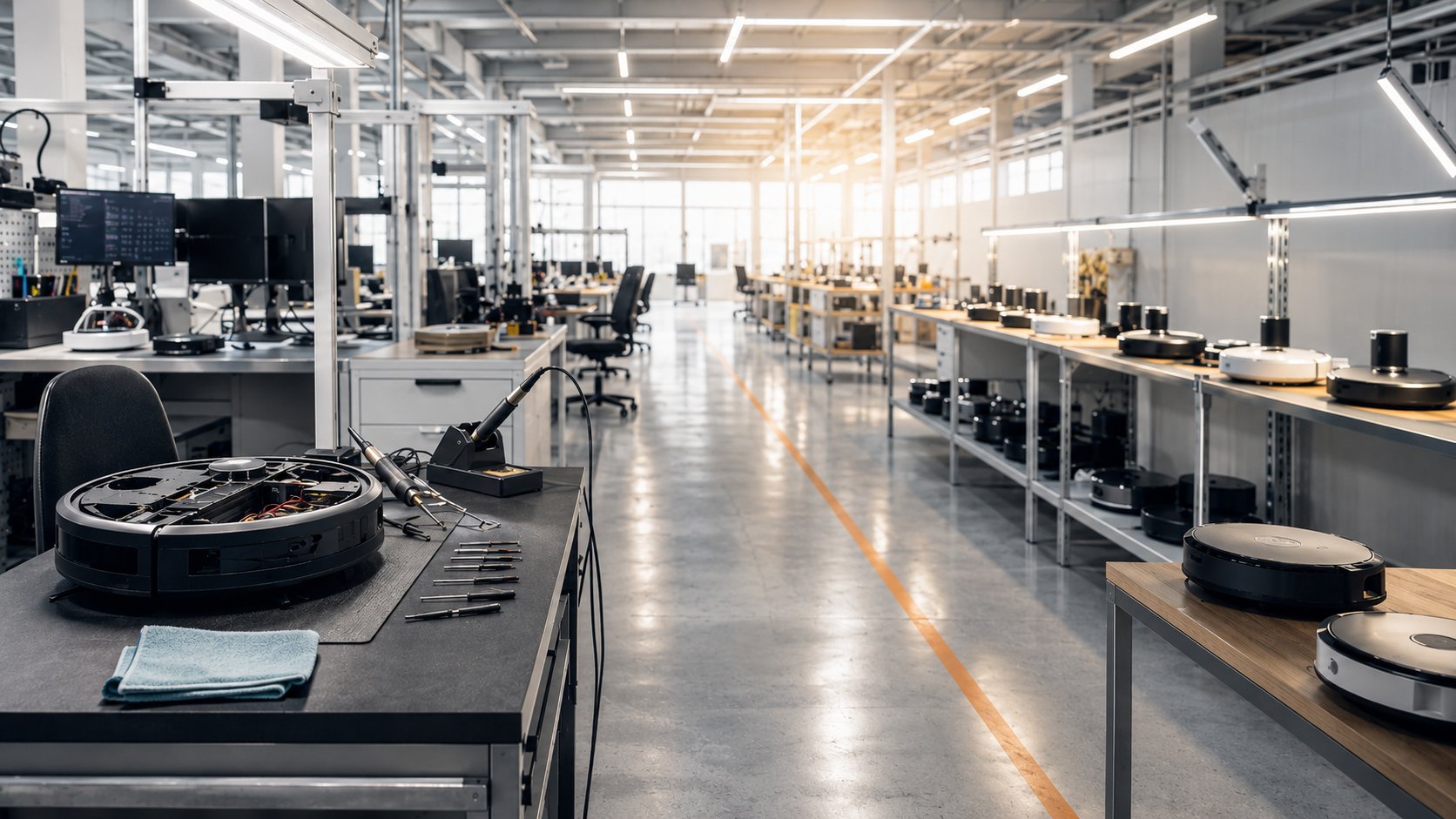
Robotics & Floor Care
Service for robot vacuums and mops
from intake to report
We test, repair and refurbish robot vacuums, cordless vacuums and small appliances at our service centre in Heiligenhaus, Germany. Every unit comes with photos, findings and a test result, plus a documented decision: repair, refurbish, replace or recycle.
Device groups
What we work on
We work for manufacturers, importers and retailers selling in Germany, Austria and Switzerland, and handle returns, warranty and guarantee cases from four device groups.
Robot vacuums and mops
Including docking and self-emptying stations. We check drive, brushes, sensors, navigation, mopping module and charging.
Cordless and wet/dry vacuums
Cordless handheld and stick vacuums as well as wet/dry vacuums. Checks cover motor, battery, charger, electronics and suction power, among others.
E-mobility
E-scooters for private use: diagnosis, repair and functional testing. The scope, for example how batteries are handled, is agreed per project.
Small household appliances
Small electrical appliances where testing and refurbishment pay off relative to the device value. The pilot shows whether that holds for yours.
Which models we can take on depends mainly on spare parts, service software and technical documentation. We clarify this with you before we start.
Process
Six steps per unit
Every step is documented against the unit. We agree with you what happens at each step before the first device arrives.
- 01
Intake and identification
We record model, unit ID and firmware version, photograph the condition on arrival and check that accessories and station are complete.
- 02
Diagnosis
Technicians test the unit, describe the fault and document findings and root cause with photos.
- 03
Decision
Repair, refurbish, replace or recycle, following the rules agreed with you. The yardstick is repair cost, device value and parts availability.
- 04
Repair and final test
After repair, each unit gets a functional test, for robots covering suction, mopping, charging and navigation, for example. The result goes into the test log.
- 05
Data wipe
We reset the unit to the agreed scope: stored maps, Wi-Fi data and the link to the user account, as far as this can be removed on the device or through your service access.
- 06
Feedback and report
Results and evidence go to you as manufacturer or retailer for every case. Once a month, we sum up all cases in one report.
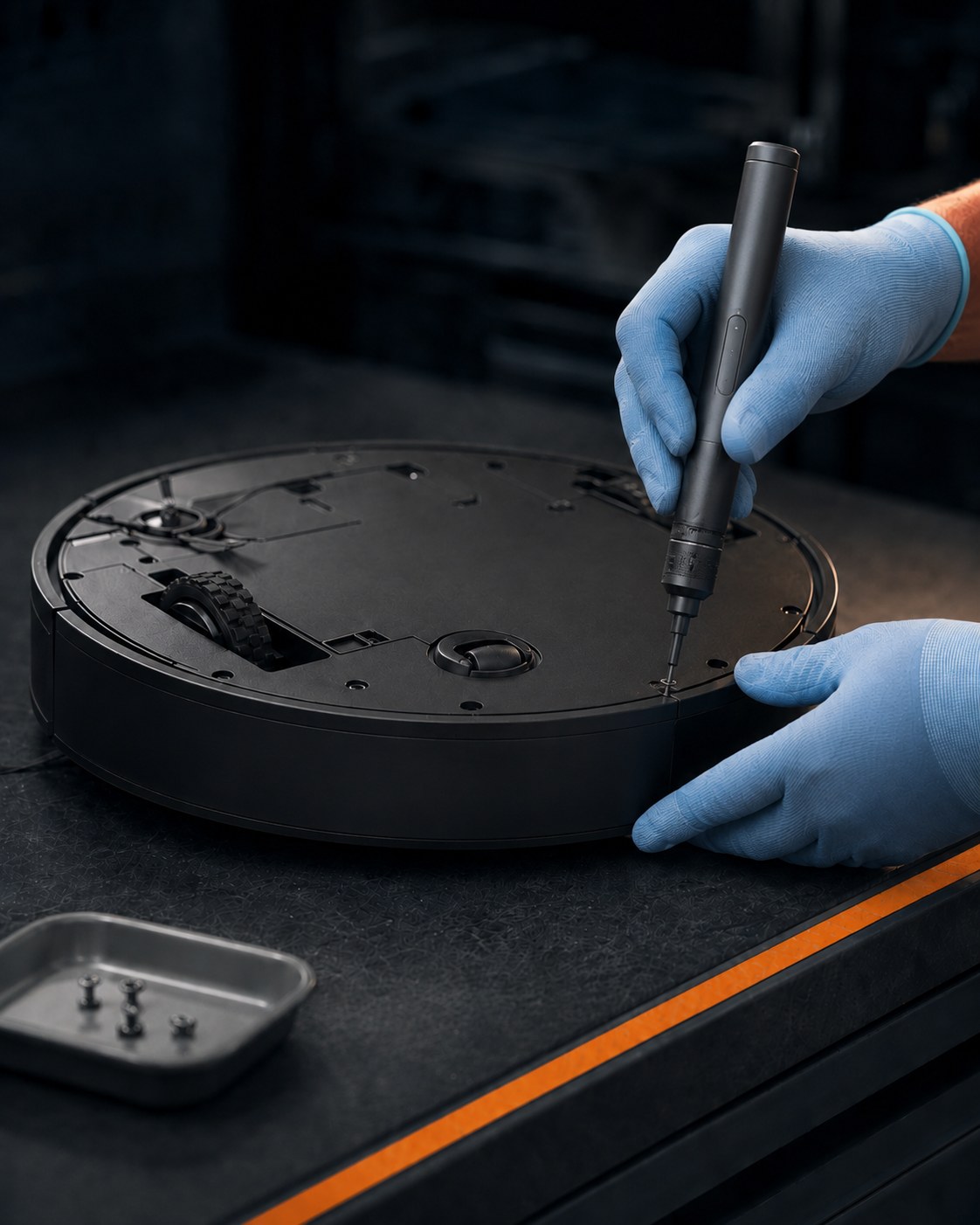
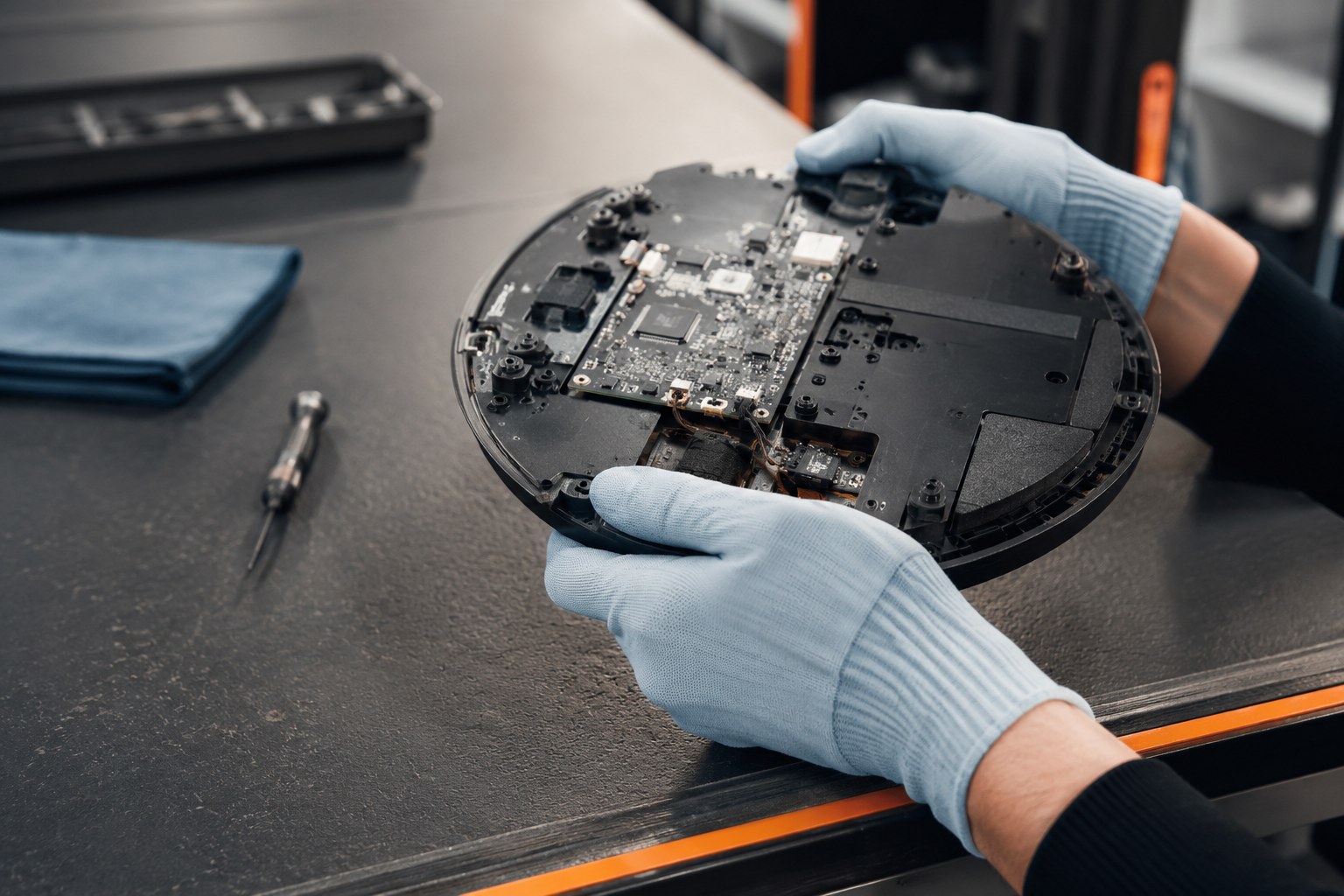
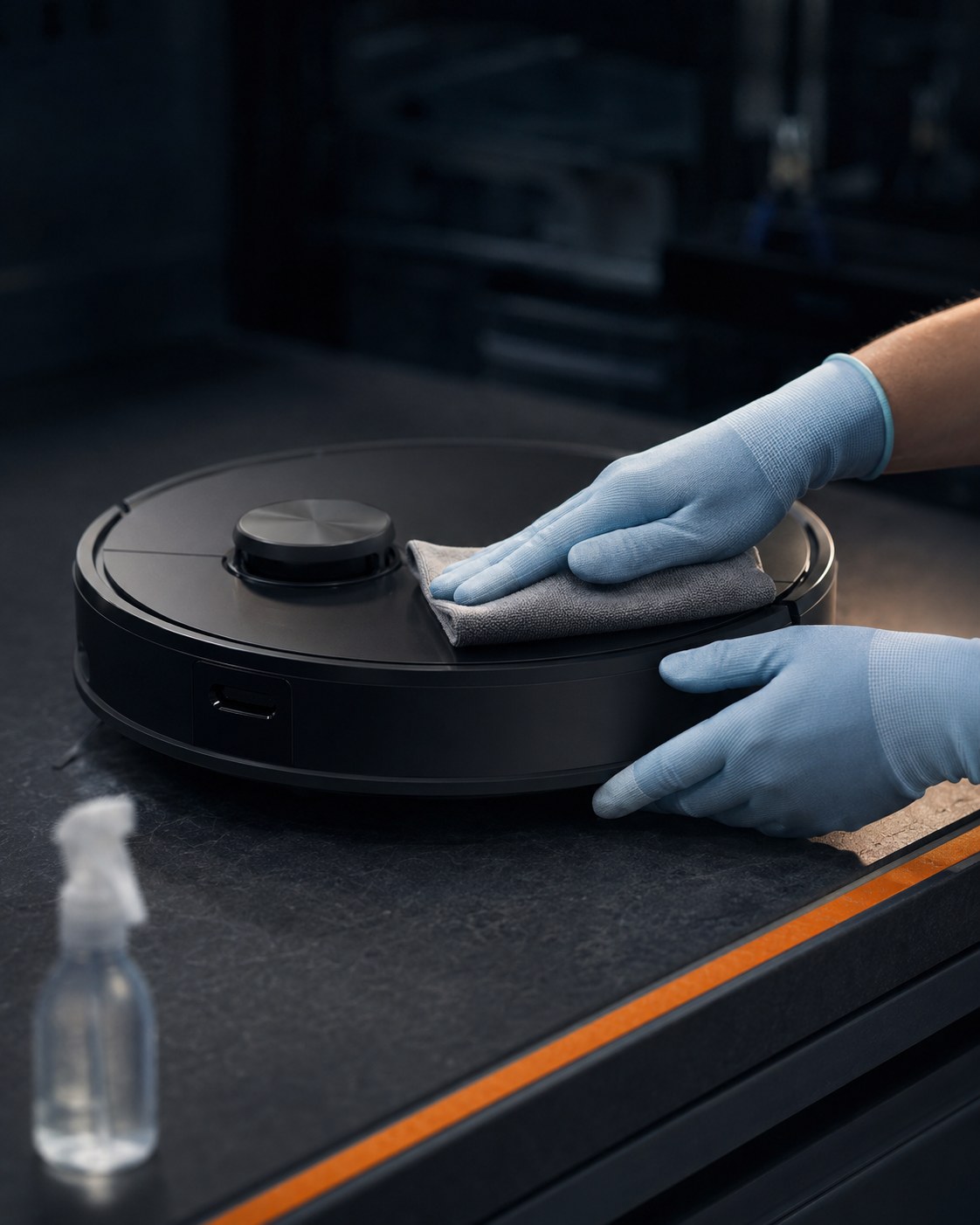
What you get per case
Proof you can check
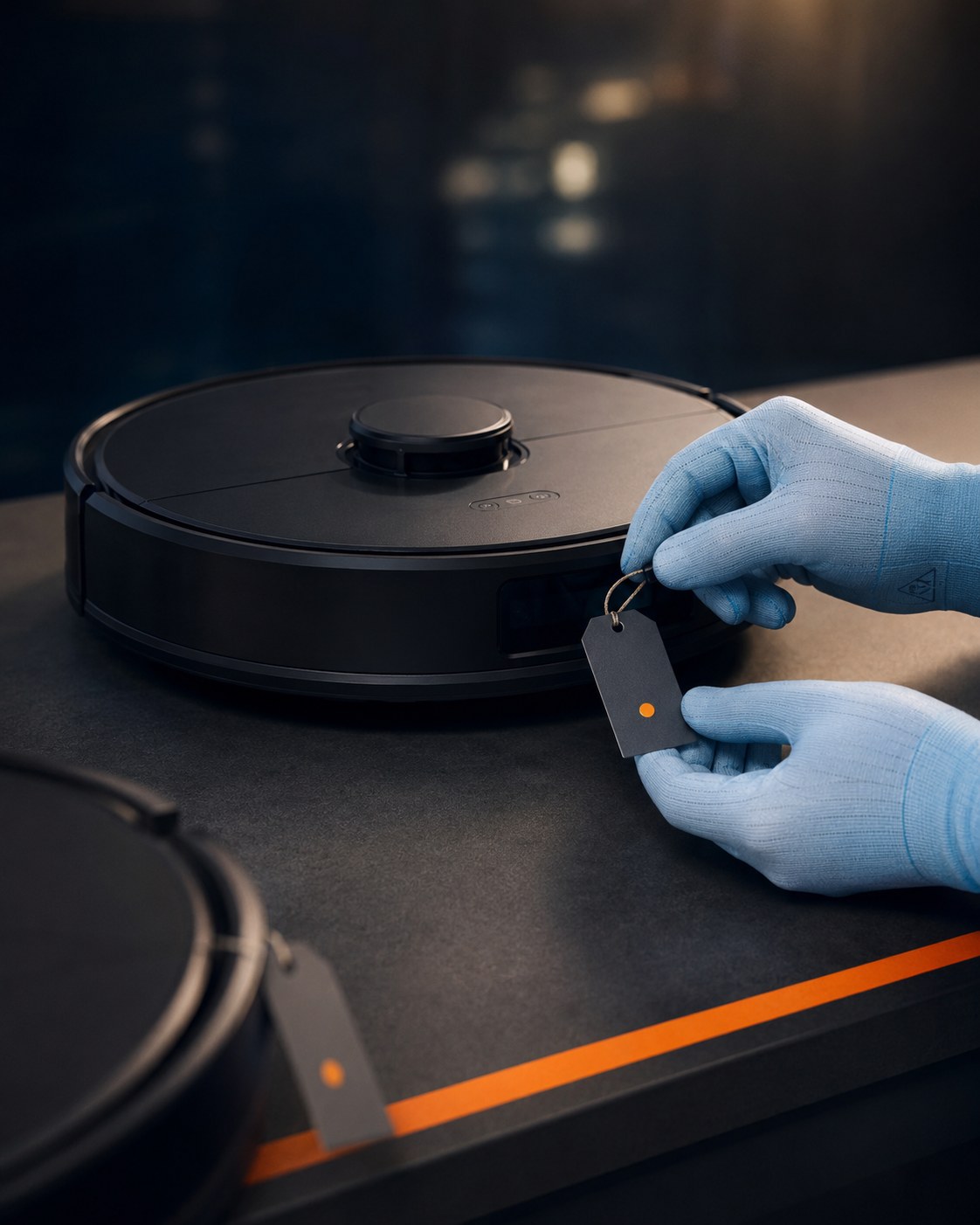
For every unit you can see what we found and why we decided as we did. That makes it easier to settle complaints, check invoices and feed faults back to product development.
Diagnostic photos
Condition on arrival and the fault location, clearly linked to the unit.
Fault and root cause
What was reported, what we found and which component is affected.
Reason for the decision
Why the unit was repaired, refurbished, replaced or recycled, measured against your rules.
Test log
Which functions were tested after repair and with what result.
No fault found, with reasons
Units without a verifiable fault are reported separately, with a description of the test. They are not counted as repaired.
Monthly and fault cluster report
Frequent faults per model, decisions taken and turnaround times at a glance.
We agree the content, format and handover of the evidence with you during the pilot.
Legal framework
Right to repair and robot vacuums
Robot vacuums and mops, cordless vacuums and wet/dry vacuums are not covered by the manufacturer repair obligation under Sections 479a et seq. of the German Civil Code (BGB). For vacuum cleaners, Annex II of Directive (EU) 2024/1799 refers to Regulation (EU) No 666/2013, which expressly excludes these appliances. Whether they are repaired therefore remains your decision, within the legal guarantee, commercial warranty and your service offer.
One change still matters: if a seller remedies a defect in a consumer sale by repair, the limitation period for claims based on defects is extended once by twelve months (Section 475e(5) BGB, for sales contracts from 31 July 2026). The more durable the repair, the lower the risk of the same unit coming back within that period.
For e-scooters, the manufacturer obligation is limited to removing and replacing the battery. The underlying requirement in Article 11 of the Batteries Regulation (EU) 2023/1542 applies from 18 February 2027.
More on the right to repairGeneral information on the legal situation in Germany as of 3 October 2026. It does not constitute legal advice.
FAQ
Robotics service in brief
Does the right to repair apply to robot vacuums?
The manufacturer repair obligation under Sections 479a et seq. BGB does not cover robot vacuums and mops. For vacuum cleaners, Annex II of Directive (EU) 2024/1799 refers to Regulation (EU) No 666/2013, which excludes robot, cordless and wet/dry vacuums. The seller's legal guarantee is unaffected. For sales contracts from 31 July 2026, a repair under the legal guarantee extends the limitation period once by twelve months (Section 475e(5) BGB).
How does a robotics repair pilot work?
First we agree models, volume, duration and decision rules with you, for example the cost limit up to which a unit is repaired. We then process the units in Heiligenhaus, report back on each case and sum up the results in a final report. You use it to decide whether, and at what scale, to continue.
What happens to units with no fault found?
We report them separately as "no fault found", with a description of the test and the reasoning. They are not counted as repairs. Depending on the agreement, they go back into resale after a reset or are returned to you.
How do you handle data on the devices?
Robot vacuums store room maps and Wi-Fi credentials, among other things, and are often linked to a user account. We reset the units to the agreed scope and record this in the case file. Anything that can only be removed via the manufacturer's cloud, we clarify with you in advance.
Which brands and models do you work on?
That depends mainly on whether spare parts, service software and technical documentation are available. We check this for your models in the first meeting and agree access with you as the client.
Next step
Start with a pilot, then decide
Send us a manageable batch of returns or warranty cases. For each case you get photos, findings and a test result, and at the end a report that shows whether repair and refurbishment pay off for your models.
Discuss a robotics repair pilot