
Entering the German market
After-sales for your launch
before the first unit comes back
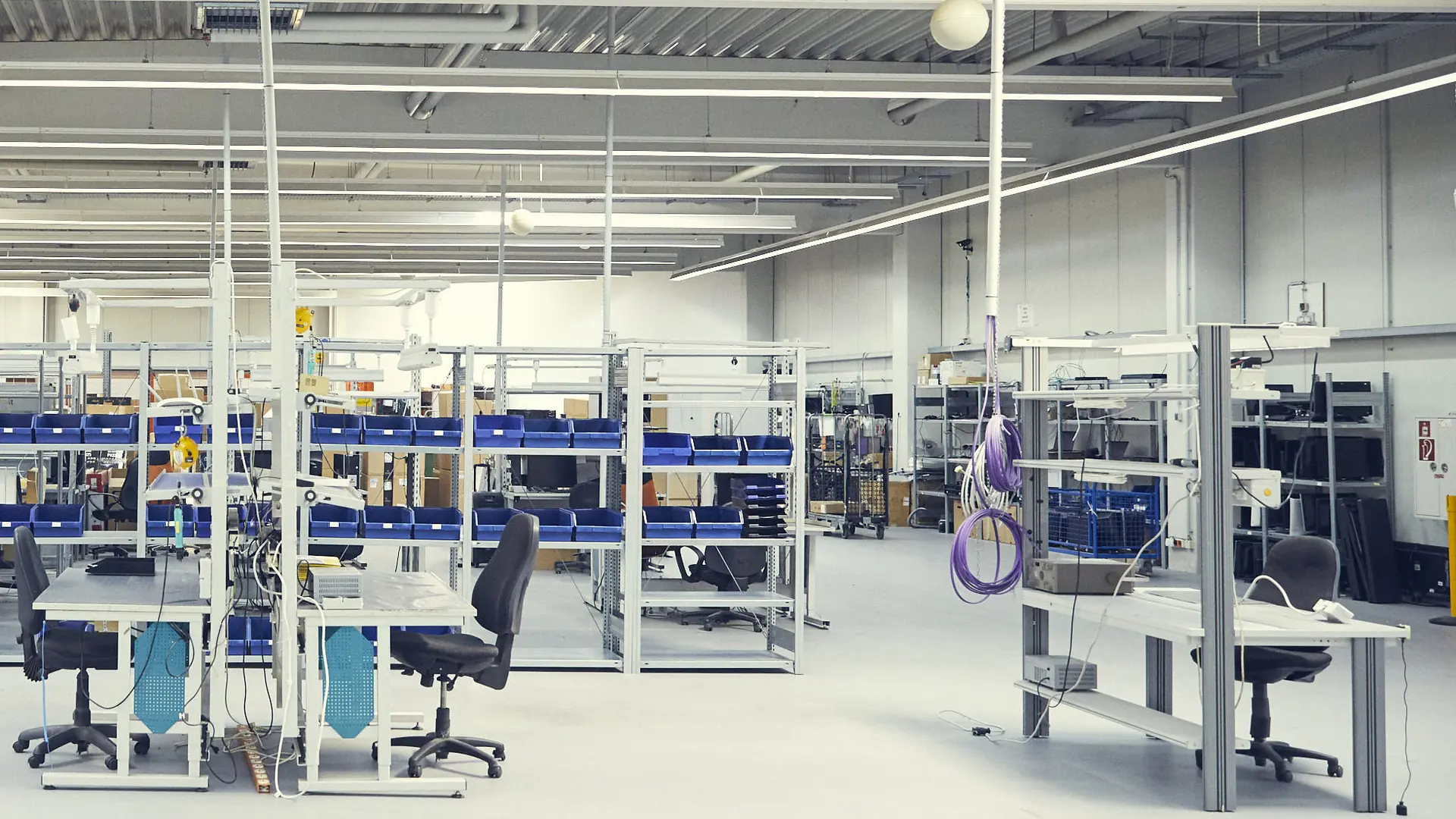
Bringing products to Germany, Austria or Switzerland? We handle service at our centre in Heiligenhaus: intake of faulty units, testing, repair, spare parts and reporting. No unit gets stuck at the retailer, and you see early which faults occur.
The usual gap
Listed, but no service yet
Before launch, the focus is on listings and prices. What happens to the first faulty unit is often still open. Then these are missing:
An address in the EU
Faulty units are shipped back to the country of origin or sit at the retailer.
Spare parts on site
Sea freight takes weeks. Without an initial stock, every repair turns into a replacement.
Rules per fault
Who decides between repair and replacement, and up to what cost?
Data per serial number
The first weeks show whether a component fails in series. Without data, you notice too late.
What we take on
Your service partner in Germany
We combine the services to fit your service strategy, from a single module to the complete process.
Intake and return shipping
Collection from the customer or a returns label, return shipping after repair. Faulty units have an address in Germany.
Repair at our service centre
Warranty and legal guarantee cases as well as paid repairs outside the warranty.
DOA checks
We check units reported as dead on arrival against your DOA guidelines.
Spare parts management
We stock your spare parts in Heiligenhaus and manage inventory so repairs do not wait for parts.
Software updates and rework
Flashing firmware and technical rework, from single units to series.
Reporting
Faults, turnaround times and costs per model. No-fault-found units are reported separately.
How we start
Four steps to the first service case
We agree the process with you before the first unit is sold.
- 01
Models and variants
Which models, which EU variants and firmware versions? For this we need technical documentation, a spare parts list and service software.
- 02
Rules and approvals
Test instructions per fault, decision rules for repair or replacement and cost limits up to which we decide ourselves.
- 03
Parts and tools
An initial stock of the most common spare and wear parts is with us before the first cases arrive.
- 04
Ramp-up with reporting
We process the first cases, report back on each one and send reports at an agreed interval, so you spot series faults early.
Which models we can take on depends mainly on spare parts, service software and technical documentation. We clarify this before we start.
Clear split
What stays with you
Registrations and manufacturer obligations remain with you or your authorised representative, not with us: for example registration with stiftung ear under the German Electrical and Electronic Equipment Act (ElektroG), battery registration, the LUCID packaging register and an economic operator in the EU under the General Product Safety Regulation (EU) 2023/988. We do not offer these services.
For product groups in Annex II of Directive (EU) 2024/1799, a manufacturer repair obligation has applied in Germany since 23 July 2026 (Sections 479a et seq. BGB). You may subcontract the repair to a partner, but the obligation stays with you. We can take on the operational part.
More on the right to repairGeneral information on the legal situation in Germany as of 4 October 2026. It does not constitute legal advice.
FAQ
Market entry in brief
Do we need a German entity for service?
Not for service: faulty units go to our service centre in Heiligenhaus. Separately, manufacturers without an establishment in Germany need an authorised representative for registration under the ElektroG (Section 8 ElektroG). We do not take on that role.
Which countries do you cover?
We work for manufacturers, importers and retailers selling in Germany, Austria and Switzerland. How units from Austria and Switzerland reach us is agreed per project.
How early should we plan service?
In parallel with your first listings. Spare parts, documentation and service software need to be in place before the first returns arrive. How long that takes depends mainly on your supply routes.
Who is the contracting party for retailers and end customers?
We work on your behalf as a service partner. Who contracts with retailers and end customers and who makes warranty decisions is agreed with you before we start.
What does the service cost?
We work with fixed rates per service case, agreed in advance for your models and services, so costs stay predictable.
Next step
Settle service before the first unit is sold
Tell us your models, target markets and launch date. We show you which modules you need and what we need from you.
Discuss an OEM service programme